Oviond Blog
10 Best AgencyAnalytics Alternative Tools for 2026
Searching for an AgencyAnalytics alternative? See our 2026 list of the 10 best reporting tools for agencies, comparing features, pricing, pros, and cons.

Tired of Late-Night Reporting Chaos?
It's the end of the month. You're juggling dozens of client accounts, exporting CSVs, chasing connector logins, and pasting screenshots into decks that already feel old by the time they go out. If you're looking for an AgencyAnalytics alternative, it's usually because the reporting process itself has become the problem.
This guide is for agency owners, account managers, and ops leads managing recurring reporting across 5 to 50 plus clients. The goal isn't to admire feature lists. It's to find a tool that fits how agencies work. Multi-client setup, branded delivery, automated delivery, client access, and a pricing model that doesn't punish growth.
For many teams, the true pain isn't one missing chart. It's the mess between tools. Google Ads in one tab, GA4 in another, email metrics somewhere else, and client-facing dashboards living in a setup nobody wants to maintain. If that sounds familiar, this guide to GTM data alignment is a useful companion read.
Agency reporting that finally feels simple. That's the standard worth aiming for.
Table of Contents
- 1. Oviond
- 2. Databox
- 3. DashThis
- 4. Whatagraph
- 5. Swydo
- 6. Klipfolio (Klips & PowerMetrics)
- 7. TapClicks
- 8. NinjaCat
- 9. Supermetrics
- 10. Google Looker Studio (and Looker Studio Pro)
- Top 10 AgencyAnalytics Alternatives: Quick Comparison
- Agency Reporting That Finally Feels Simple
1. Oviond

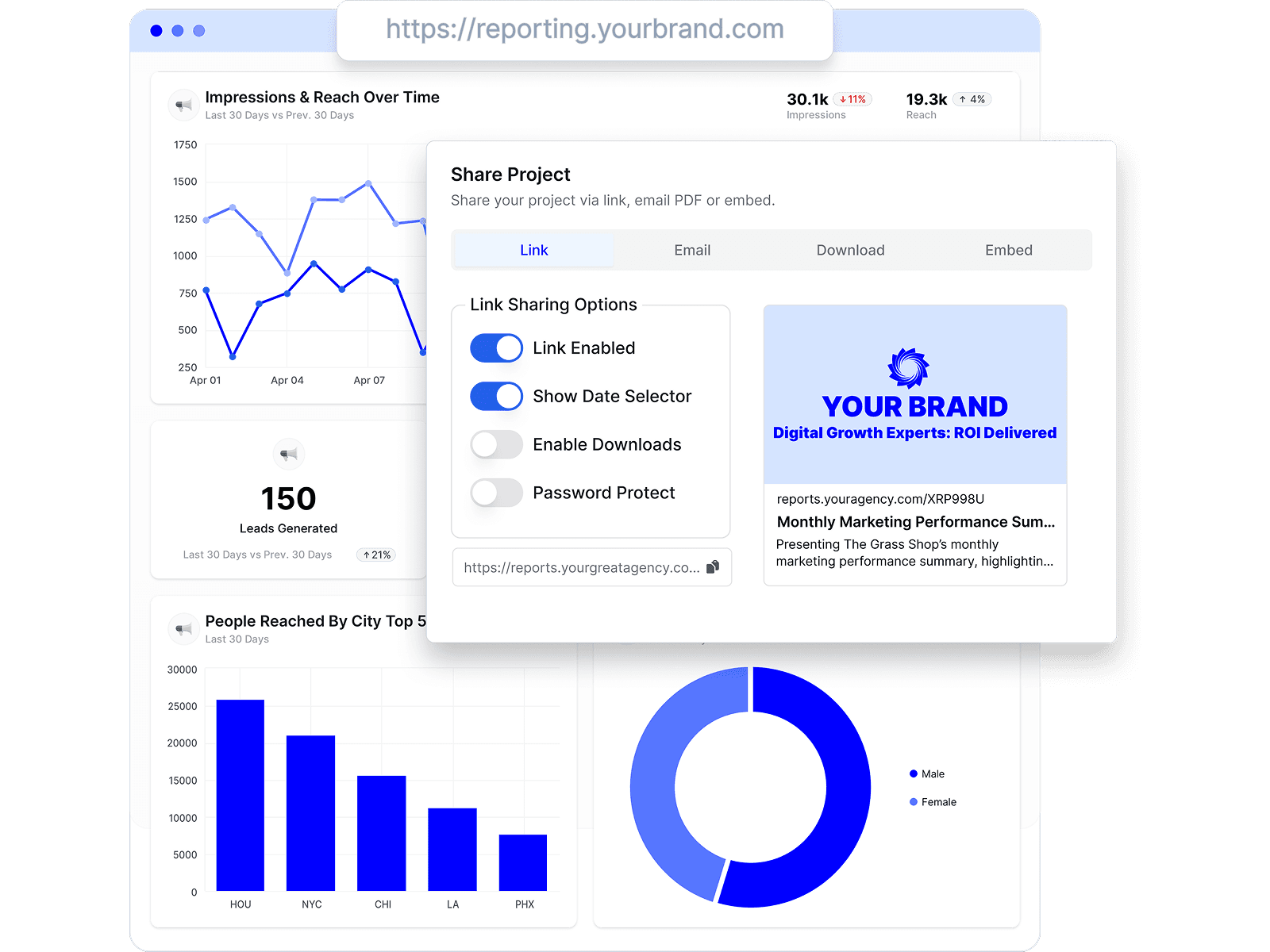
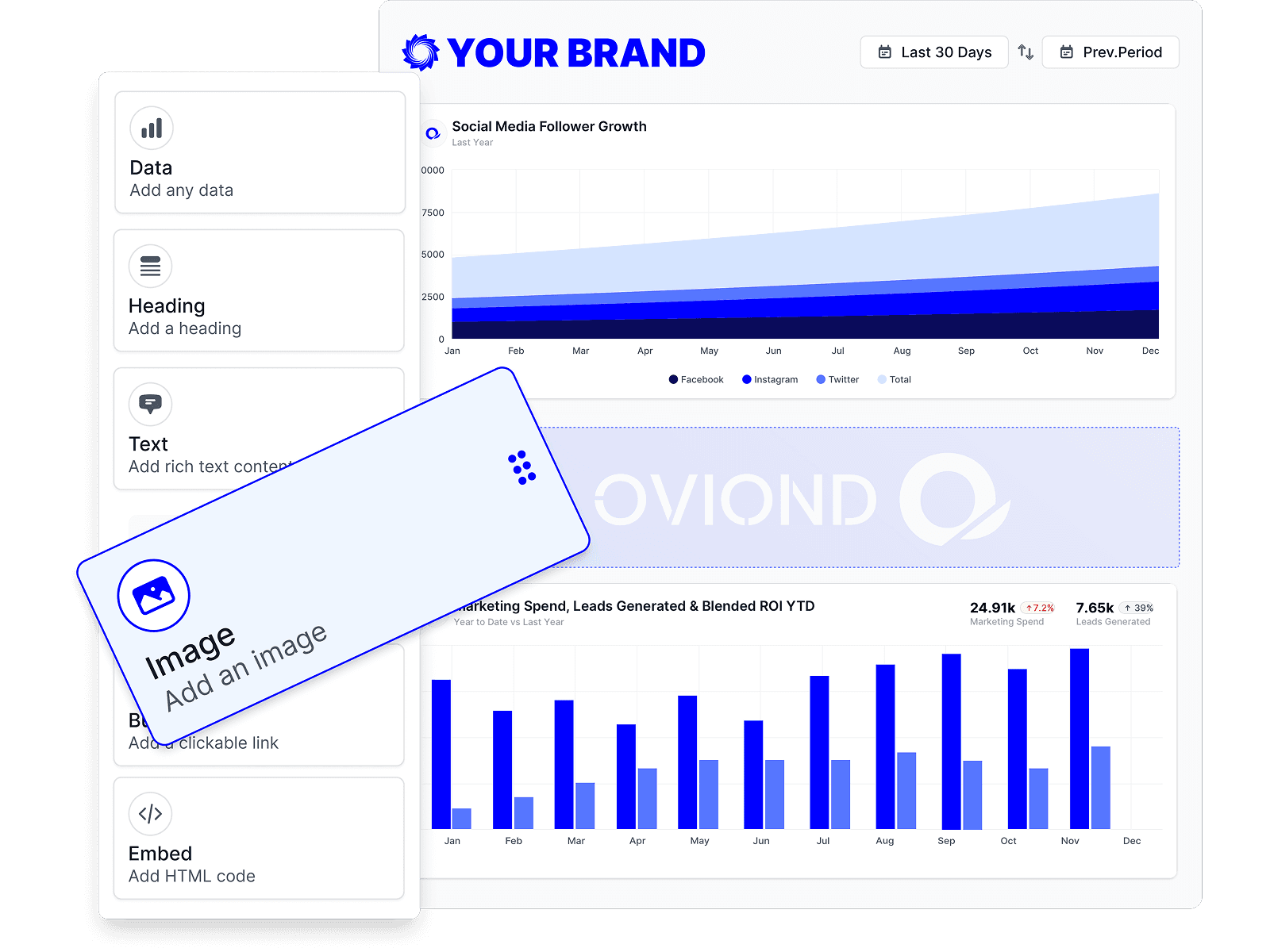
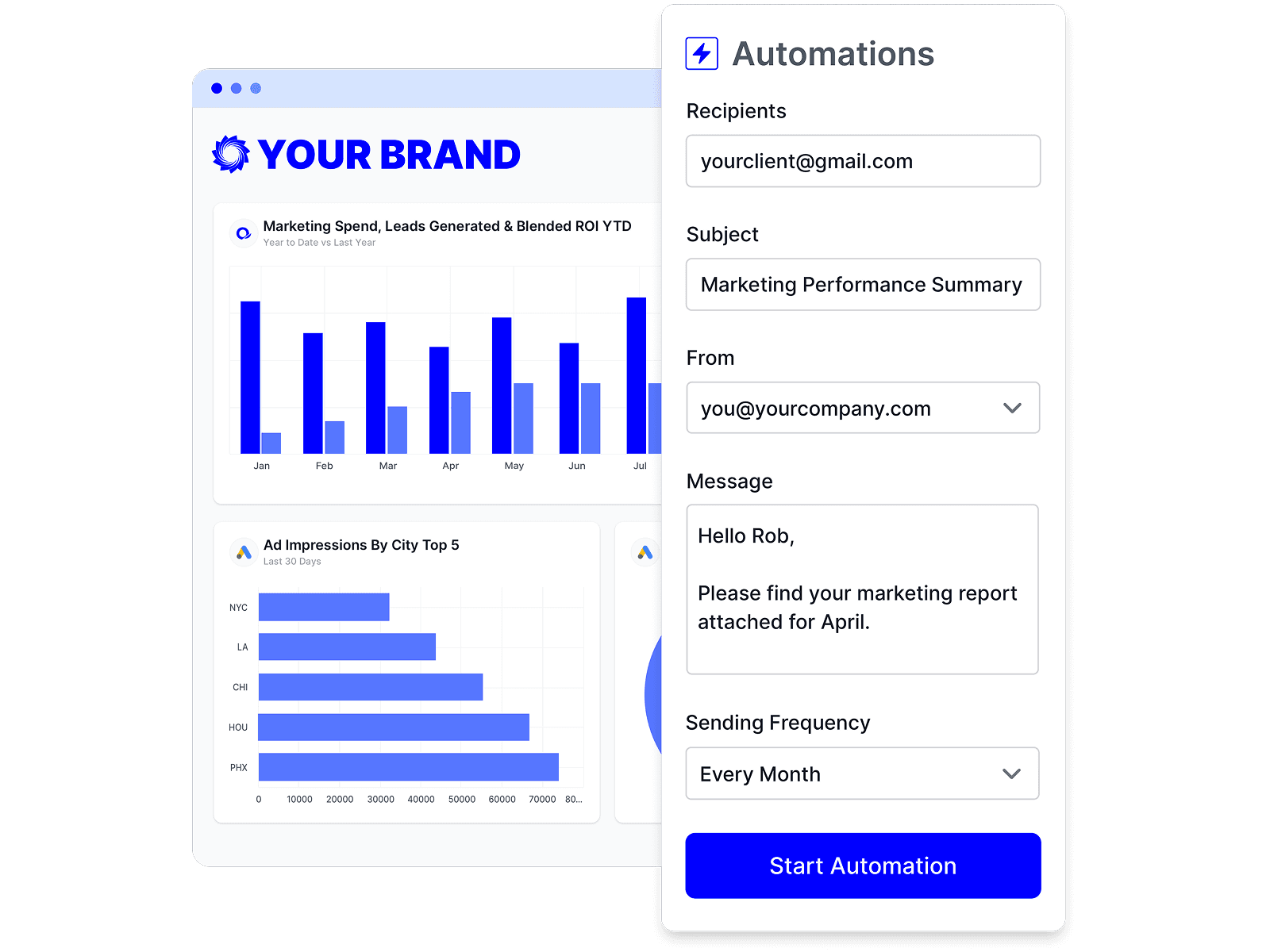
If your agency wants a simpler replacement for spreadsheet-heavy reporting or messy Looker Studio setups, Oviond is a strong AgencyAnalytics alternative. It's built around client reporting, not generic BI workflows, and that shows in the day-to-day experience. You connect channels, build branded dashboards and reports, automate delivery, and give clients a clean view under your own branding.
Oviond connects to over 60 data sources across analytics, paid media, search, social, email, CRM, and e-commerce, which makes it practical for agencies consolidating scattered client data into one reporting workflow (Oviond). It also supports white-label reporting with custom domain support, including one custom domain allocation per client slot, so agencies can present dashboards under their own URLs instead of a vendor-branded portal (Oviond dashboard and reporting software).
Why Oviond works well for agencies
The biggest advantage is how agency-native the setup feels. You're not piecing together a connector tool, a dashboard tool, and a delivery tool. The platform covers branded dashboards, automated delivery, reusable templates, calculated metrics, goals, custom email senders, unlimited reports, unlimited dashboards, and unlimited users in one plan structure that scales by client count.
Plans start at $39/month billed annually for up to five clients, with all features included in the same plan structure rather than split across feature gates. That makes it easier to budget as your roster grows and easier to give account managers access without thinking about per-seat cost.
Practical rule: If your team sends recurring client reports every month, pricing by client count with unlimited users is usually easier to manage than seat-based pricing.
Oviond also has built-in AI support through an MCP server, which enables agencies to generate dashboards and reports from assistants like Claude or ChatGPT, while on-platform AI produces insights and summaries to reduce manual reporting effort (Oviond on GetApp). That matters because agencies increasingly want faster setup and less manual commentary writing, not just prettier charts.
For teams comparing agency reporting platforms, this roundup of digital marketing reporting platforms is a useful side-by-side read.
Where it fits best
Oviond fits agencies that need white-label client reporting and dashboard software without turning reporting into a technical project. It's especially good for multi-client reporting where branded dashboards, custom domain delivery, automated delivery, and team-wide access matter more than building a warehouse-first data stack.
Trade-offs are real. Some users report occasional connector reauth needs, first-time users may need a little setup time to get templates and queries right, and it isn't trying to be a dedicated mobile-first analytics app. But if your agency wants reporting that finally feels simple, Oviond gets closer to that than most tools in this category.
2. Databox

Databox works well for agencies that care as much about live dashboard visibility as they do about scheduled reporting. If clients like checking performance between review calls, Databox has a more KPI-monitoring feel than some pure reporting tools.
It offers 130+ native integrations, client sub-accounts, white-labeling, custom domains, goal tracking, and alerts. That mix makes it appealing for agencies that want one place for dashboards, scorecards, and client access without building from scratch. You can start small, test workflows, and expand from there through Databox.
Where Databox stands out
Its structure is agency-friendly. Client sub-accounts make sharing cleaner, and the dashboard builder gives account teams a lot of freedom without forcing them into a technical workflow. The mobile app angle is also useful when clients or account leads want a quick pulse check instead of waiting for the next PDF.
The trade-off is cost control. Databox can become more expensive as connected data sources stack up, which matters fast when each client pulls from ads, analytics, CRM, and spreadsheet sources. It also doesn't give you the same depth of custom modeling you'd expect from a BI-style setup.
Don't judge Databox on template aesthetics alone. Judge it on how many sources each client actually needs, because that's where pricing pressure usually shows up.
If your current process still relies on manual updates and late-month cleanup, these digital marketing reporting best practices are worth applying no matter which platform you choose.
For agencies that want a polished dashboard experience, KPI alerts, and flexible sharing, Databox is a credible alternative. For agencies trying to simplify white-label client reporting across a growing roster, it's worth checking whether its pricing model still feels comfortable once the client mix gets more complex.
3. DashThis

DashThis is for agencies that want reporting to be easy to hand off to account teams. It has a short learning curve, clean templates, and a reporting workflow that feels built for monthly client delivery rather than data operations.
The platform includes 50+ marketing integrations, AI Insights, scheduled email delivery, PDF exports, and white-label URL and branding controls through DashThis. That makes it a practical fit for agencies that need to turn multi-channel data into client-ready dashboards without much setup overhead.
Why agencies pick DashThis
DashThis is strong when the goal is consistency. You want the same kind of report across many clients, with enough customization to match the account but not so much flexibility that every report becomes a one-off project. For many agencies, that's exactly the sweet spot.
Its AI layer also helps with narrative summaries and dashboard explanations, which is useful for account managers who need to package performance clearly. The workflow for PDF, email, and link-based delivery is straightforward, which matters when reporting needs to happen on time every month.
A fair drawback is pricing. When dashboards and data sources stack up, costs can rise. It's also less suited to agencies that need deeper cross-source modeling or custom data logic.
If branded delivery is a big part of your client experience, this guide on how to white-label digital marketing reports and dashboards is worth reading alongside any DashThis trial.
DashThis isn't trying to be everything. It's trying to make recurring client reporting clean and low-friction, and for a lot of agencies, that's enough.
4. Whatagraph
Whatagraph sits a little further upmarket than some agency reporting tools. It's a good fit for agencies that want stronger metric standardization across channels and more structure around templated reporting at scale.
In market comparisons, experts note that AgencyAnalytics offers only light data transformation, while alternatives such as Whatagraph are increasingly valued for no-code modeling tools and the ability to blend metrics across sources using calculated fields and custom math. The same market view points out that advanced marketing intelligence contracts typically start at $1,500 per month, and flat-rate models are becoming more attractive to agencies trying to avoid growth tax from per-client pricing (Whatagraph market comparison).
What it does well
Whatagraph is useful when your agency wants more consistency in how metrics get defined and displayed across clients. Its templates, linked assets, and centralized standardization can help larger teams keep reporting aligned across PPC, SEO, and social accounts.
Another plus is team access. Market commentary around AgencyAnalytics alternatives highlights tools like Swydo and Funnel for unlimited clients and users without per-seat fees, and Whatagraph is often part of that broader conversation because agencies are actively trying to remove seat-based friction as teams grow. You can explore the platform directly at Whatagraph.
For agencies moving away from repetitive manual reporting, this article on manual reporting vs automated digital marketing reporting frames the trade-off well.
Whatagraph's downside is that cost can climb as source needs grow, and it still won't satisfy agencies that want the total freedom of a custom BI stack. But for standardizing reporting across many clients, it's a serious option.
5. Swydo
Swydo has stayed relevant for one simple reason. It understands recurring agency reporting. If your team sends a lot of monthly PPC, paid social, and cross-channel reports, Swydo's linked templates and standardized workflows are still appealing.
It offers automated scheduling, delivery, KPI targets, alerts, task workflows, and 30+ native integrations across PPC, analytics, and social through Swydo. That's a practical setup for agencies that need to roll out the same reporting system across a large client list without constant rebuilding.
Why Swydo stays popular with agencies
Swydo is often the straightforward choice for teams that don't want a big learning curve. Linked templates make it easier to update many reports at once, and non-technical account managers can usually get comfortable with it quickly.
Market commentary also notes that alternatives like Swydo and Funnel now support unlimited clients and unlimited users without per-seat fees, which directly addresses one of the biggest frustrations agencies face as they grow (Funnel alternative overview). That matters if your current setup gets more expensive every time you add a team member or client.
Swydo tends to work best when your reporting process is standardized. It's less compelling when every client needs unusual formulas, blended metrics, or custom data logic.
Its trade-off is flexibility. If your agency needs deeper transformations or more advanced blending, Swydo can feel constrained. But if you need reliable client reporting with agency-friendly rollout, it still deserves a place on the shortlist.
6. Klipfolio (Klips & PowerMetrics)

Klipfolio is the option for agencies that want more control than a template-first reporting tool usually gives them. It can do white-label dashboards, SSO, deeper customization, and more complex KPI work, but it asks more from the team using it.
That's the trade. You get flexibility, but you also get a steeper learning curve. Agencies with a more technical ops lead or a data-savvy reporting owner usually get more out of Klipfolio than agencies that just want client reports shipped every month. You can review the platform at Klipfolio.
Where Klipfolio makes sense
Klipfolio is useful when a standard dashboard builder feels too restrictive, but a full BI stack feels too heavy. The split between Klips and PowerMetrics gives agencies different ways to build depending on whether they want classic dashboards or more metric-centric reporting.
Its white-label and SSO options also make it a reasonable fit for client portal use cases. That said, it can become expensive as dashboards and add-ons build up, and onboarding is rarely as fast as a more agency-native reporting platform.
If your team values dashboard flexibility above simplicity, Klipfolio is worth a look. If your priority is reducing monthly reporting friction for a multi-client account team, it may feel like more platform than you need.
7. TapClicks

TapClicks is built for larger agency environments. It's not the first tool I'd point a smaller agency toward, but it becomes more relevant when you're managing a big client roster, multiple teams, or more layered reporting operations.
The platform is known for a broad connector library, data unification, dashboards, scheduled reporting, AI features, and professional services. For agencies that need onboarding help, advanced permissions, or a more enterprise-style rollout, TapClicks can cover a lot of ground through TapClicks.
Who should consider TapClicks
TapClicks makes sense when reporting is tied to a larger operations layer. Multi-location reporting, role-based access, structured onboarding, and managed support all become more important once the agency gets large enough. Smaller teams often don't need that much machinery.
One broader market trend is worth noting here. In a 2026 evaluation framework, white-label maturity is increasingly judged in two tiers, from simple logo swaps to custom domains and proprietary portals, and that distinction now forms part of expert review criteria for client-facing dashboards. The same market view says Funnel offers 500+ always-maintained connectors and Improvado offers 1,000+ connectors including custom-built integrations for niche adtech, showing how far the top end of the category has pushed beyond AgencyAnalytics' connector depth (2026 alternatives review on LinkedIn).
That's relevant because TapClicks competes more in that upper band of agency tooling than in the lighter SMB reporting tier. If your agency wants something simpler, it may be too much. If your environment is large and messy, it may be exactly the right kind of overbuilt.
8. NinjaCat
NinjaCat is designed for agencies managing a lot of accounts and trying to avoid template sprawl. Its appeal is less about quick setup and more about one-to-many reporting control.
You get 150+ marketing and adtech integrations, centralized template systems, data unification options, warehousing support, and AI or LLM features through NinjaCat. That package speaks most clearly to medium and large agencies, especially those that want master templates feeding many client reports.
Why NinjaCat appeals to larger agencies
NinjaCat's templating model is useful when too many account managers are building too many versions of the same report. Centralized report generation helps agencies keep presentation consistent and avoid the chaos that comes from every client deck being its own snowflake.
It also leans more into modern marketing data infrastructure than lightweight reporting tools do. That's good if your agency is evolving into a more advanced data operation. It's less good if the team only needs easier white-label reporting and faster monthly delivery.
Agencies often outgrow simple reporting because of process, not because of charts. NinjaCat is for teams whose reporting process has become a system problem.
Its main downside is accessibility. Packaging is enterprise-style, demos come first, and the value tends to show up more clearly at larger client volumes than it does for smaller agencies.
9. Supermetrics
Supermetrics is different from most tools on this list. It isn't trying to be your client reporting layer. It's a data connector platform that moves marketing data into the places you already use, like spreadsheets, BI tools, and warehouses.
That makes it a better fit for agencies that already like their reporting front end but hate manual exports and brittle data pulls. You can explore destinations and connectors at Supermetrics.
When Supermetrics is the better move
If your agency already runs on Looker Studio, Google Sheets, Excel, Power BI, or a warehouse-backed reporting stack, Supermetrics can be a smart replacement for manual data prep. It supports multiple destinations and gives agencies more control over where data lives.
This angle doesn't get enough attention in most AgencyAnalytics alternative roundups. A comparative analysis argues that competitor content usually focuses on connector counts and dashboard templates while missing data portability and BI destination flexibility. The same analysis says only 30% of alternatives offer native MCP for AI-assisted analysis across multiple destinations, and that tools like Supermetrics and Dataslayer stand out by supporting 150 to 325+ sources across 13 to 19 BI destinations. It also notes growing demand for live, editable dashboards in external BI tools rather than static vendor reports.
For agencies that care about owning the reporting layer, not renting it from a dashboard vendor, Supermetrics solves a real problem. The downside is obvious. You still need a reporting front end, and pricing can get more complex as destinations, sources, users, and account limits expand.
10. Google Looker Studio (and Looker Studio Pro)
Looker Studio stays popular because it gives agencies control and a free starting point. If your client reporting is heavily built around GA4, Google Ads, BigQuery, and Sheets, it's still one of the most flexible ways to build dashboards without paying for a full reporting platform upfront.
The standard version is free to start, and Looker Studio Pro adds team workspaces, governance, and Google Cloud support. Agencies can review it directly at Google Looker Studio.
Why agencies still use Looker Studio
Looker Studio is still a serious AgencyAnalytics alternative for agencies that are comfortable building and maintaining their own dashboards. It shines when your team wants custom layouts, Google-native data access, and a large template ecosystem.
The catch is that free doesn't always stay cheap. Once you need non-Google connectors, permissions discipline, stable handoffs, or client-safe white-label delivery, the admin overhead rises. That's usually the moment agencies either add connector tools like Supermetrics or move back toward a more agency-native reporting platform.
A balanced view is important here. Looker Studio can absolutely work. It just works best when your agency has the patience and skill to manage it well. If you want more context on the Google Cloud side of things, this piece on GCP data engineering insights is useful background.
Top 10 AgencyAnalytics Alternatives: Quick Comparison
| Tool | Core features | UX & quality | Price & value | Target audience | Standout (unique) |
|---|---|---|---|---|---|
| Oviond 🏆 | 50–60+ connectors, live dashboards, white‑label reports, API, automated scheduling | ★★★★★ | 💰 From $39/mo (annal, up to 5 clients); scales by client count | 👥 Agencies (SMB→Enterprise) with many clients | ✨ Unlimited dashboards/reports, no per‑seat fees, MCP AI, migration & human support |
| Databox | 130+ connectors, drag‑drop dashboards, mobile apps, goal alerts | ★★★★☆ | 💰 Free tier; pricing rises with sources | 👥 Agencies needing mobile KPI monitoring | ✨ Strong mobile UX, proactive alerts, client sub‑accounts |
| DashThis | 50+ integrations, templates, PDF reports, AI Insights | ★★★★☆ | 💰 Tiered by dashboards/sources; can grow with scale | 👥 Teams wanting fast, low‑lift client reports | ✨ Very short onboarding, AI summaries, easy PDF/email delivery |
| Whatagraph | Connectors + templates, automated delivery, Whatagraph IQ | ★★★★☆ | 💰 Scales with sources; unlimited users on plans | 👥 Agencies standardizing cross‑channel reporting | ✨ Centralized metric alignment, template-driven scale |
| Swydo | Linked templates, scheduling, KPI alerts, task workflows | ★★★★☆ | 💰 Base + per‑source; costs grow with many sources | 👥 Agencies focused on standardized monthly reporting | ✨ Linked templates for mass updates, simple roll‑out |
| Klipfolio (PowerMetrics) | Deep visualizations, custom data modeling, SSO, white‑label | ★★★★☆ | 💰 Modular pricing; add‑ons can increase cost | 👥 Advanced teams needing custom KPIs & portals | ✨ High customization, SSO/portal readiness, training options |
| TapClicks | Hundreds of connectors, data unification, AI, pro services | ★★★★☆ | 💰 Quote‑based enterprise pricing | 👥 Large agencies/media groups, multi‑location clients | ✨ Enterprise automation, role‑based access, professional services |
| NinjaCat | 150+ integrations, centralized templates, warehousing, AI agents | ★★★★☆ | 💰 Quote/demo; best value at scale | 👥 Medium→large agencies managing many accounts | ✨ One‑to‑many templating, scalable reporting engine |
| Supermetrics | Connectors to Sheets, BigQuery, BI tools; scheduled pulls | ★★★★☆ | 💰 Per‑destination/source pricing; scalable | 👥 Teams that move data into BI/spreadsheets | ✨ Flexible destinations, enterprise connector reliability |
| Google Looker Studio (Pro) | Free dashboards, native Google connectors, templates, Pro for governance | ★★★★☆ | 💰 Core free; Pro/Cloud for enterprise features | 👥 Budget‑sensitive teams, Google stack users | ✨ Zero‑cost start, deep Google integration, large template ecosystem |
Agency Reporting That Finally Feels Simple
Moving on from AgencyAnalytics is usually less about chasing more features and more about fixing a workflow that's become harder to maintain than it should be. Agencies don't switch because they want a different chart library. They switch because reporting is eating time, client data is scattered, branding feels inconsistent, and each new client makes the process heavier.
The right AgencyAnalytics alternative depends on the shape of your agency. If you want total build freedom and you're comfortable managing connectors, templates, and dashboard maintenance, Looker Studio can still be a solid choice. If your agency already has a reporting front end and just needs better data movement, Supermetrics makes sense. If your team wants more templated reporting structure, DashThis, Swydo, Databox, and Whatagraph all have credible use cases.
But for many agencies managing recurring reporting across a growing client list, the primary need is simpler than that. They want one platform that handles branded dashboards, white-label client reporting, custom domain delivery, automated delivery, team access, and multi-client management without making the reporting process feel like a side job. That's why agency-native tools stand out.
Oviond is especially strong in that lane. It's built for agencies, not adapted from a generic analytics product. It consolidates performance data across the channels agencies report on, supports branded dashboards and reports, includes white-label and custom domain options, and scales by client count instead of pushing teams into per-seat friction. The built-in AI and MCP support also makes it more relevant for agencies that want faster setup and less manual report writing.
There's also a bigger practical point here. Reporting tools don't just change how data looks. They change how agencies operate. A better platform reduces version chasing, cuts down repetitive setup work, and gives account managers a cleaner way to deliver updates clients can readily use. That has a direct effect on client experience, team sanity, and how confidently your agency can grow.
Agency reporting that finally feels simple isn't a slogan. It's a good buying filter.
If a tool makes reporting clearer, more branded, easier to maintain, and easier to scale across your client roster, it's doing the job. If it adds another layer of admin, another pricing surprise, or another dashboard nobody wants to own, it isn't. Choose the platform that removes friction from the work your team repeats every month. That's the one your agency will keep using.
If your agency wants white-label client reporting without the spreadsheet mess or Looker Studio maintenance, Oviond is worth a serious look. It gives agencies branded dashboards, automated delivery, custom domain options, unlimited users, and a simpler multi-client workflow in one platform. If you're ready for agency reporting that finally feels simple, Oviond is built for exactly that.
Related articles
Simplify marketing reporting today
Stop juggling multiple tools. Start presenting clear, automated reports your clients will love