Oviond Blog

10 Best Marketing Dashboard Software for Agencies in 2026

Find the best marketing dashboard software for your agency. Our 2026 guide compares 10 top tools for automated, white-label client reporting at scale.

Co-Founder & CEO, Oviond
10 Best Marketing Dashboard Software for Agencies in 2026

It's 9 PM on a Sunday, and you're already deep in the reporting scramble. GA4 is open in one tab, Google Ads in another, Meta, LinkedIn, email, CRM, and a spreadsheet that keeps breaking every time you paste in fresh exports. That's the weekly routine for a lot of agencies, and it's exactly why marketing dashboard software matters. The right tool takes scattered client data, keeps it on-brand, and turns reporting from a manual cleanup job into something your team can run at scale.

Most agencies don't need another BI project. They need white-label client reporting, automated delivery, and a setup that doesn't fall apart when the client list grows. The problem is that too many tools still feel like generic analytics platforms, or worse, a fresh layer of Looker Studio chaos. This guide cuts straight to the tools that help agency owners, account managers, and ops leads get out of spreadsheet hell and into a cleaner reporting workflow.

Table of Contents

1. Oviond

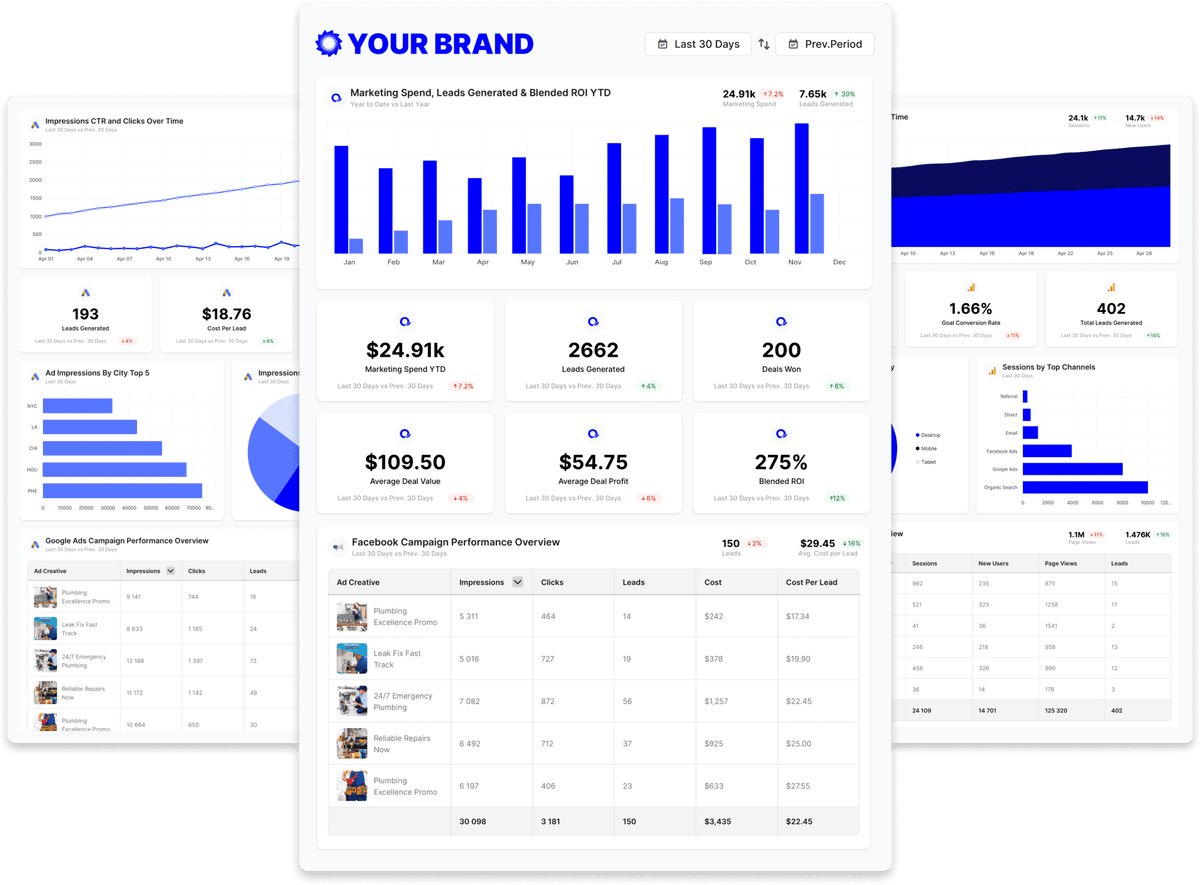
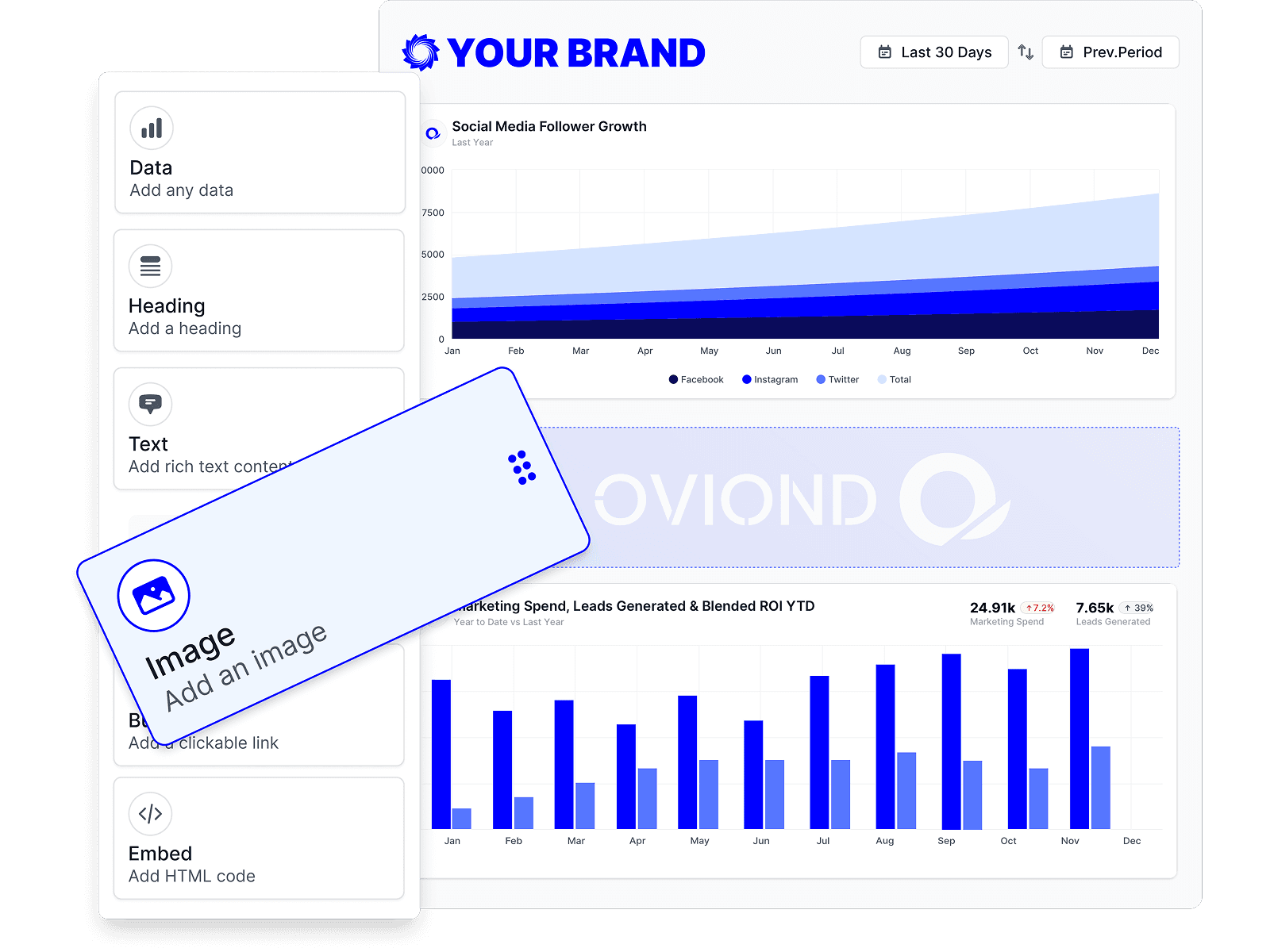
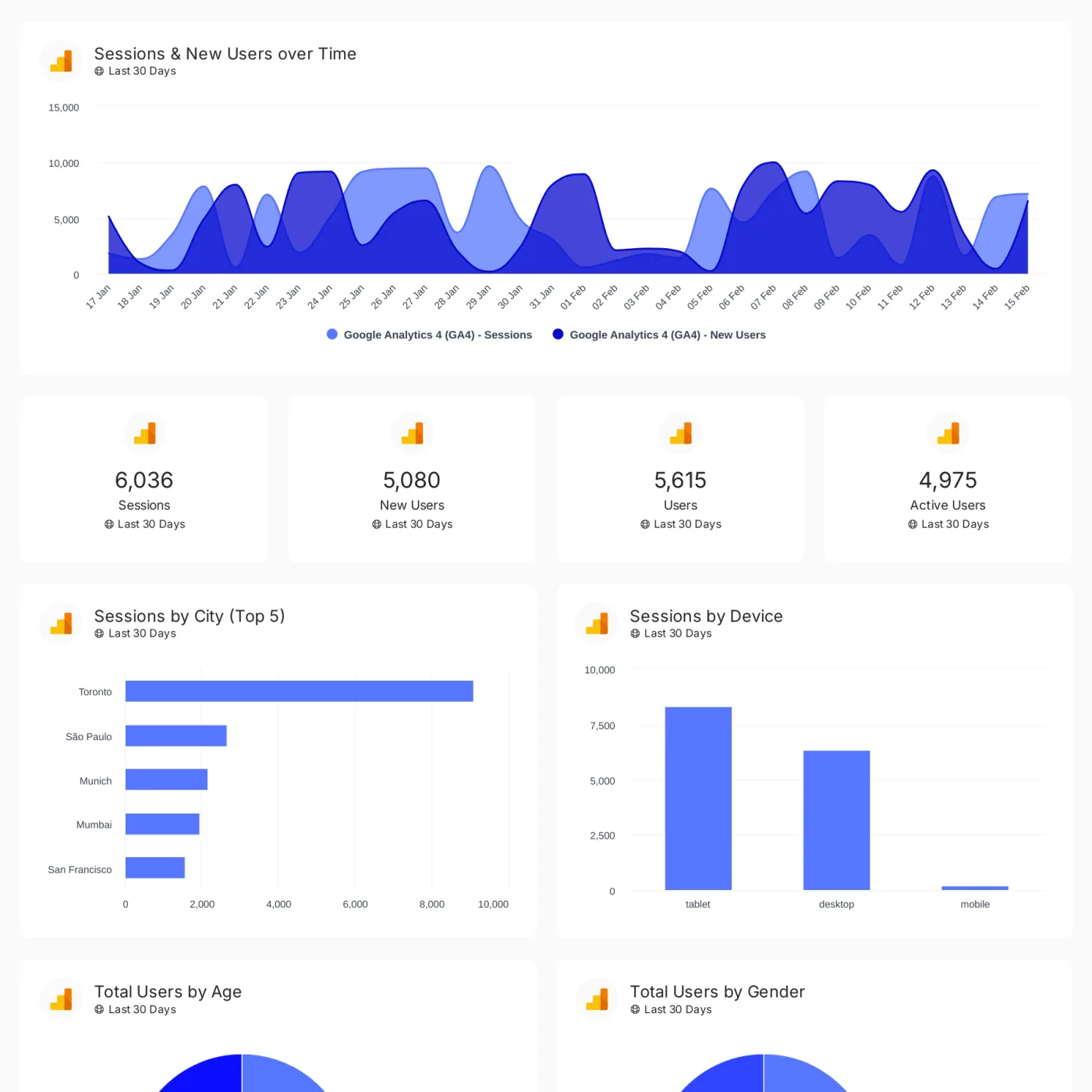
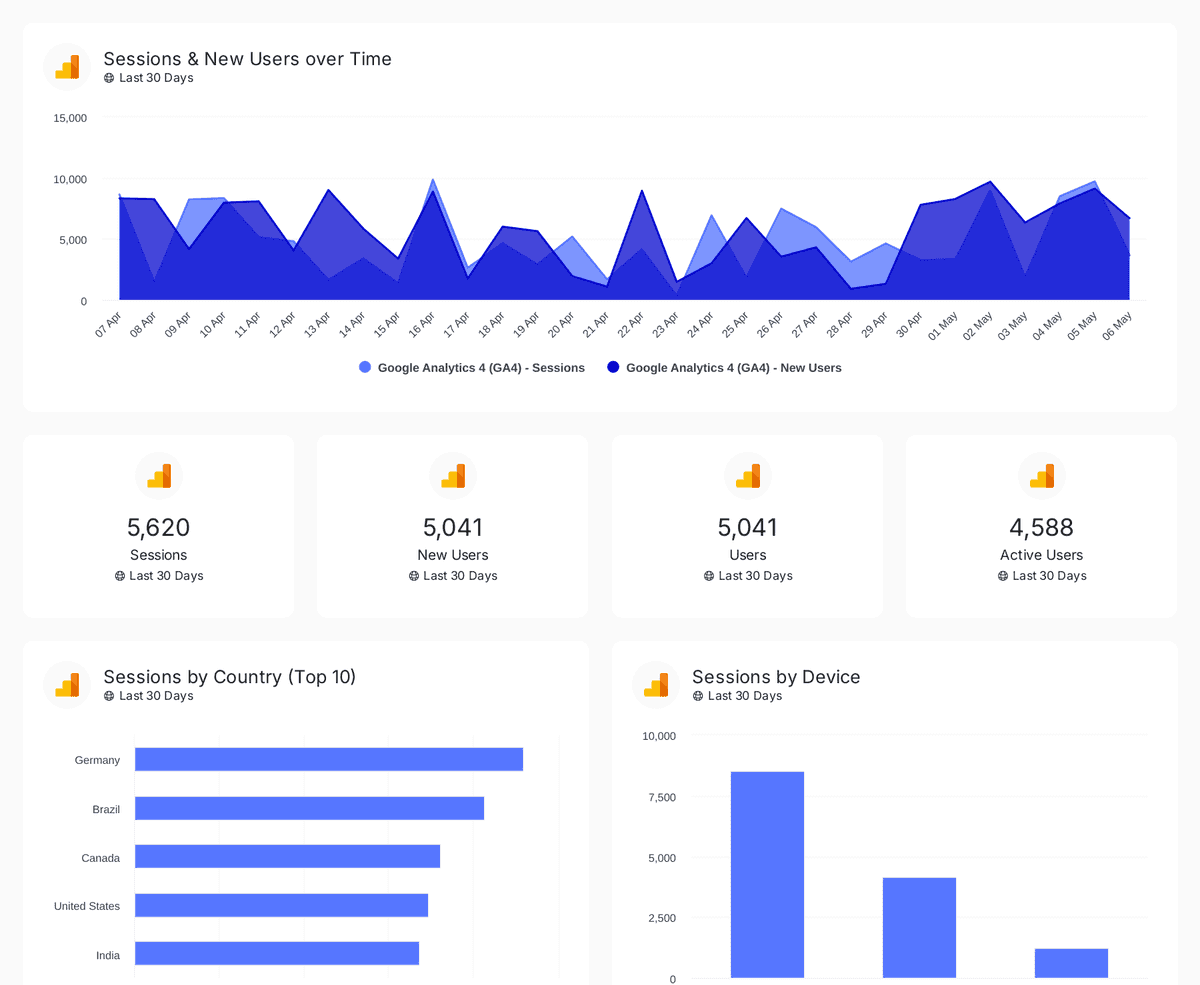
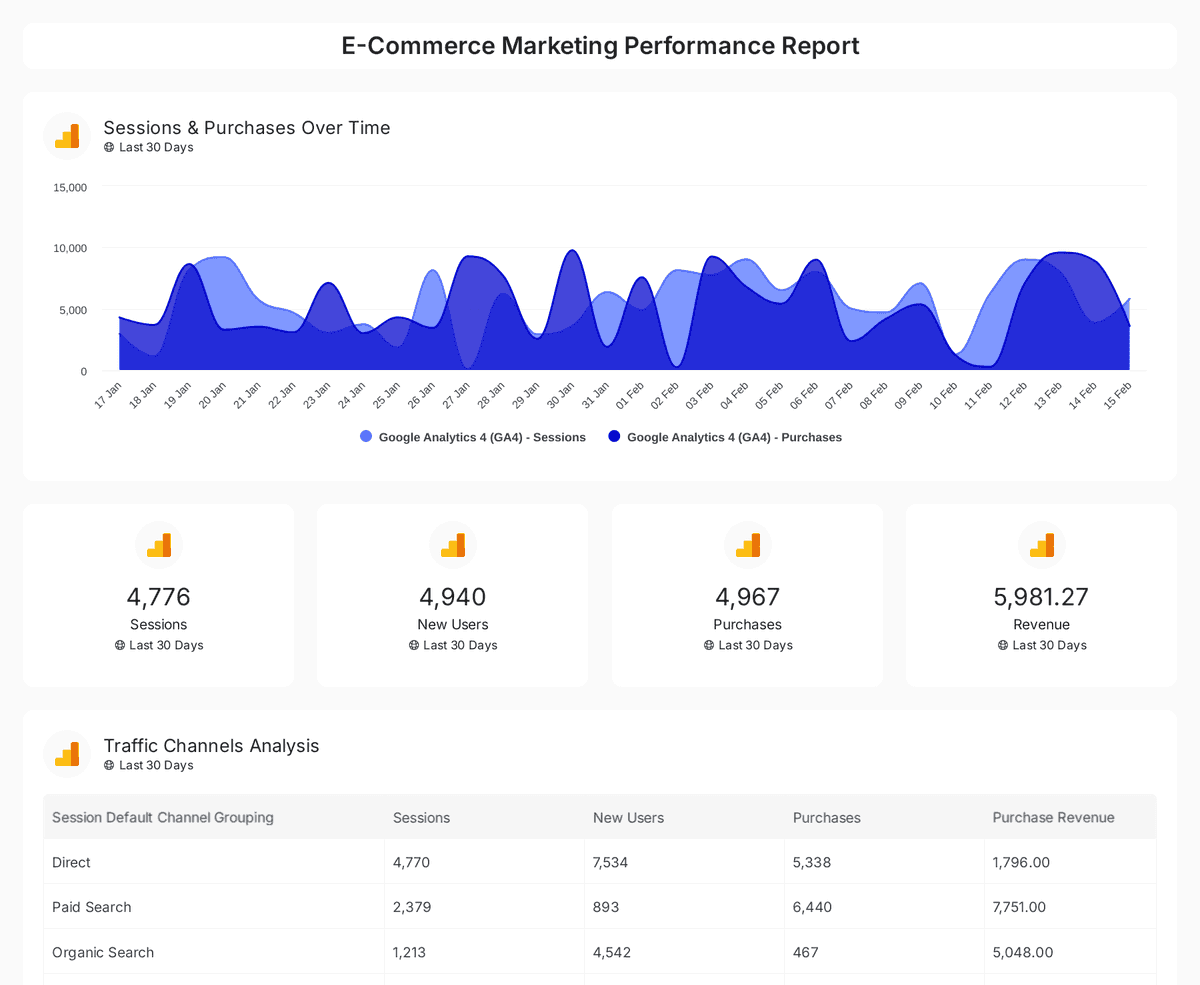
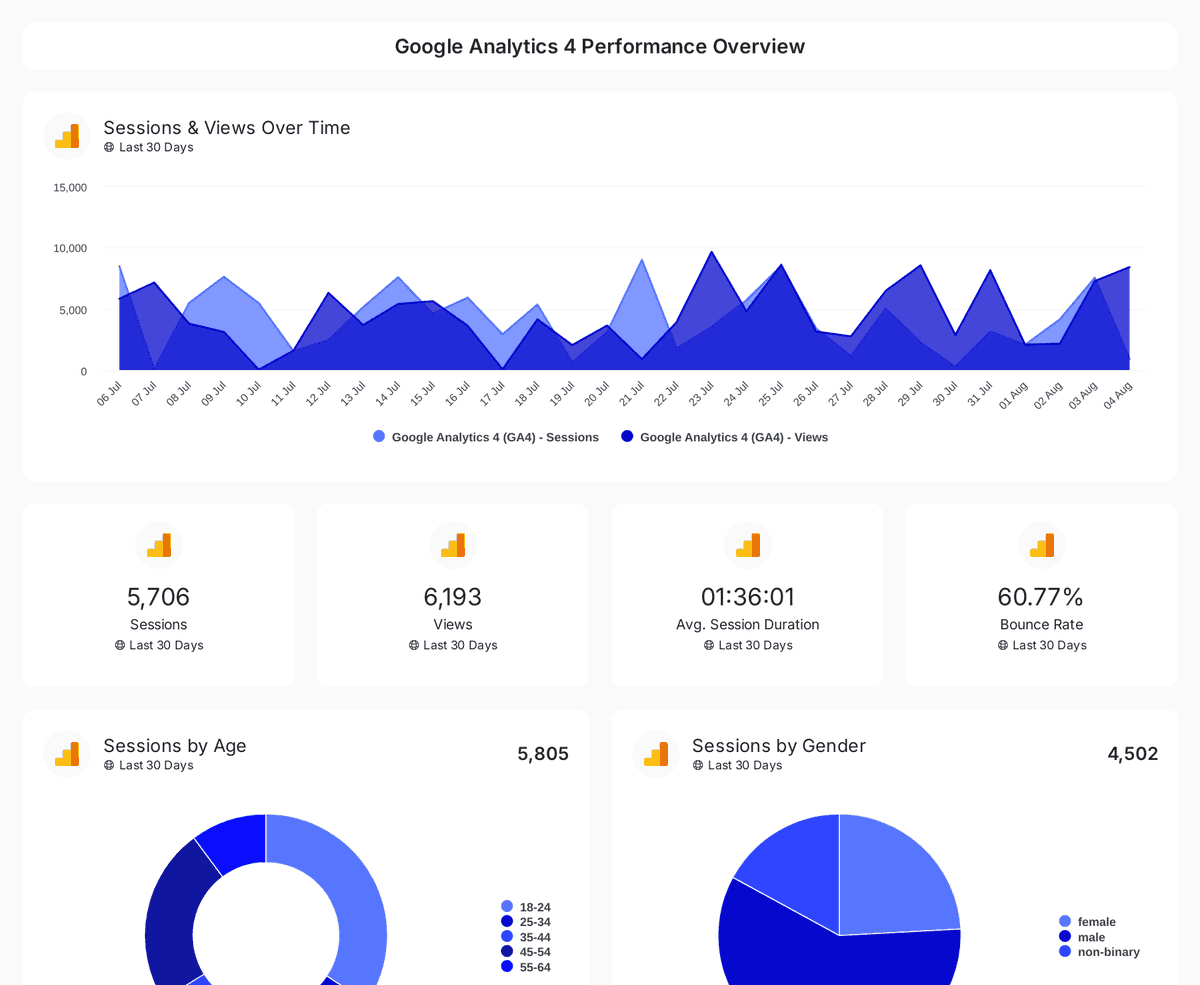
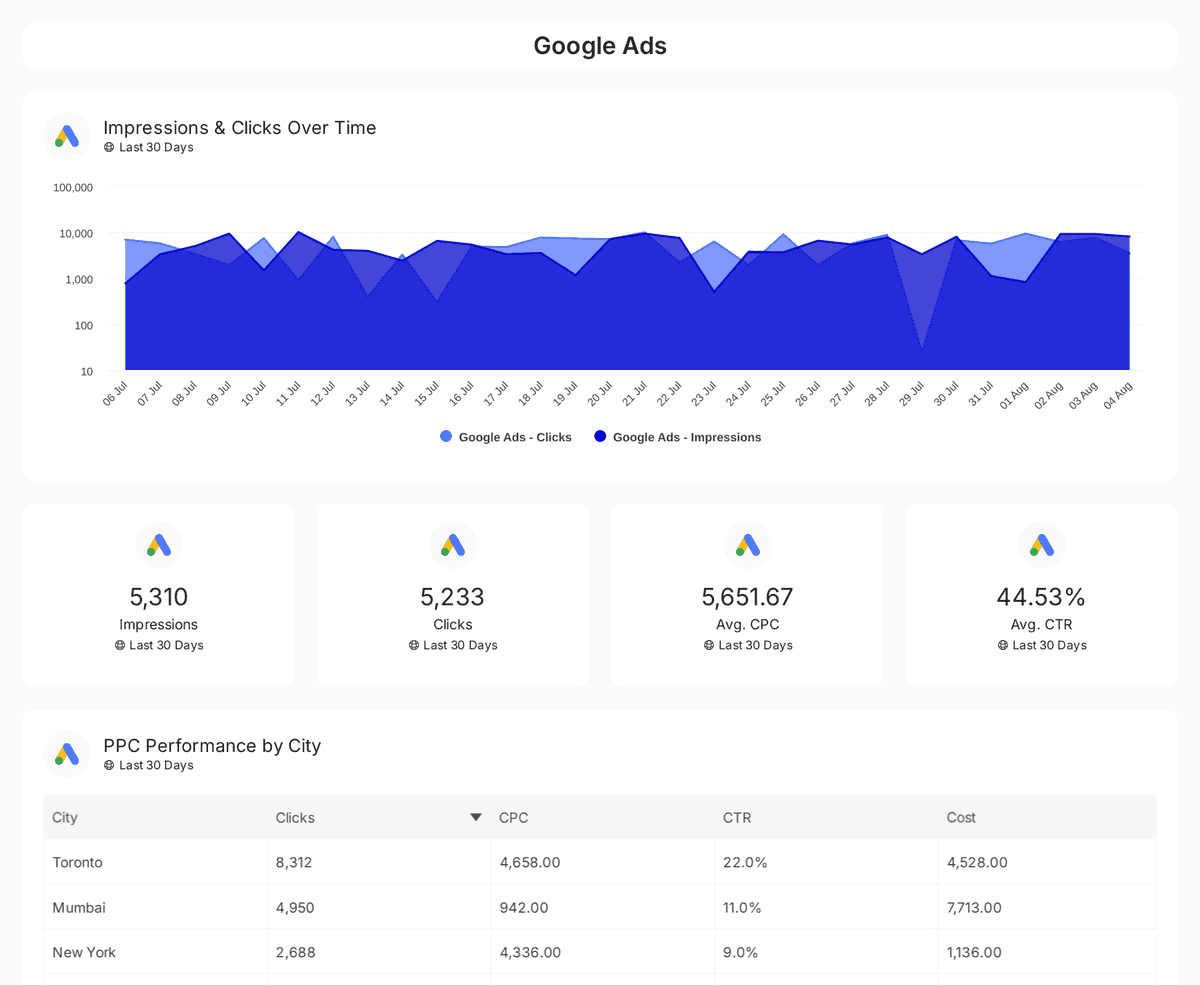
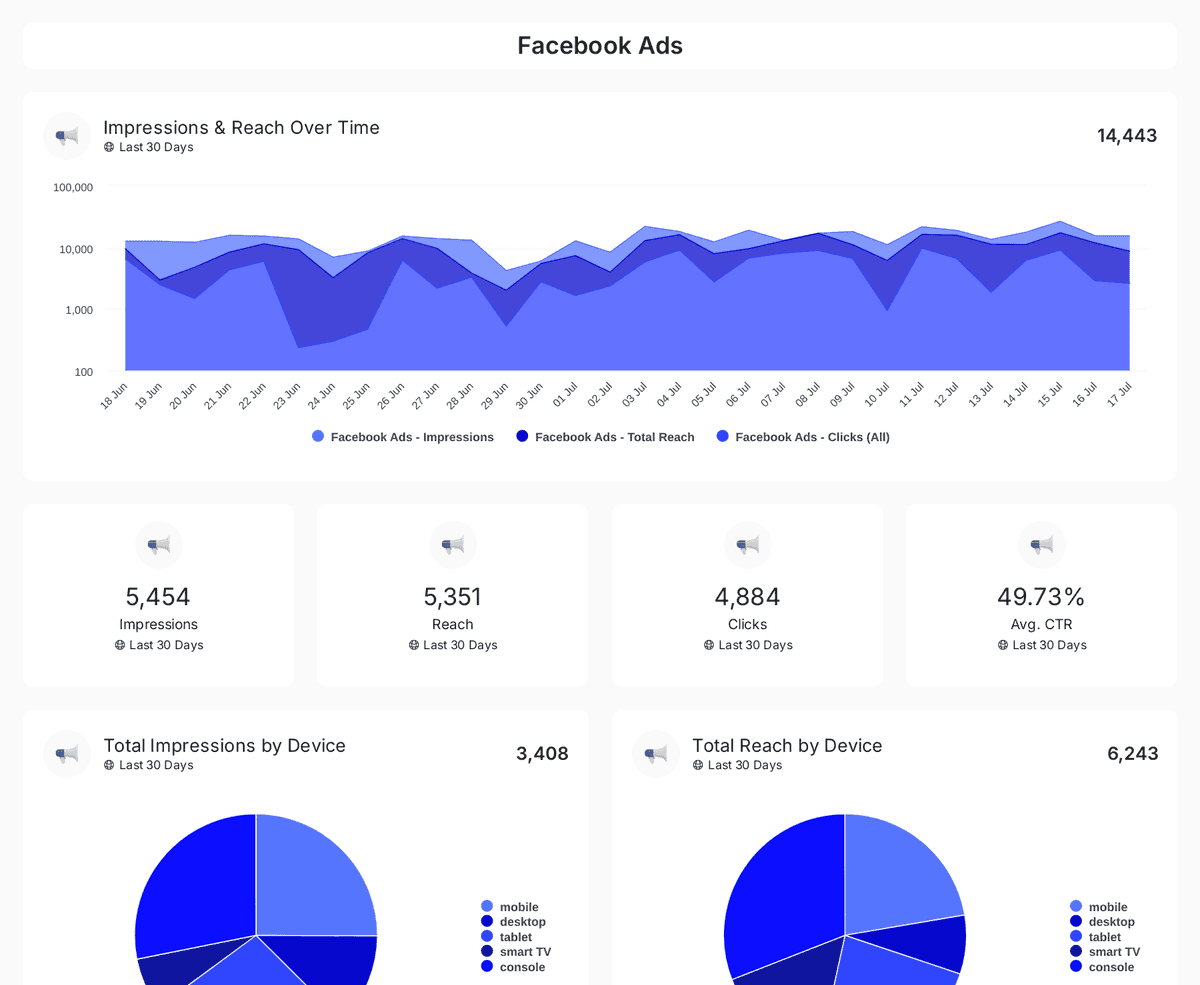
Oviond is the cleanest fit for agencies that want simple, scalable client reporting without stitching together half a dozen tools. It connects 60+ sources, including Google Analytics 4, Google Ads, Facebook, Instagram, LinkedIn, TikTok, Shopify, Mailchimp, and Google Sheets, then turns that data into branded dashboards and scheduled reports. That connector breadth fits the way agencies work, since dashboard software now needs to bring paid, social, email, CRM, and commerce data into one place instead of leaving each channel in its own silo, as noted in Databox's marketing dashboard overview.

Oviond

Built for agency delivery, not just dashboard building

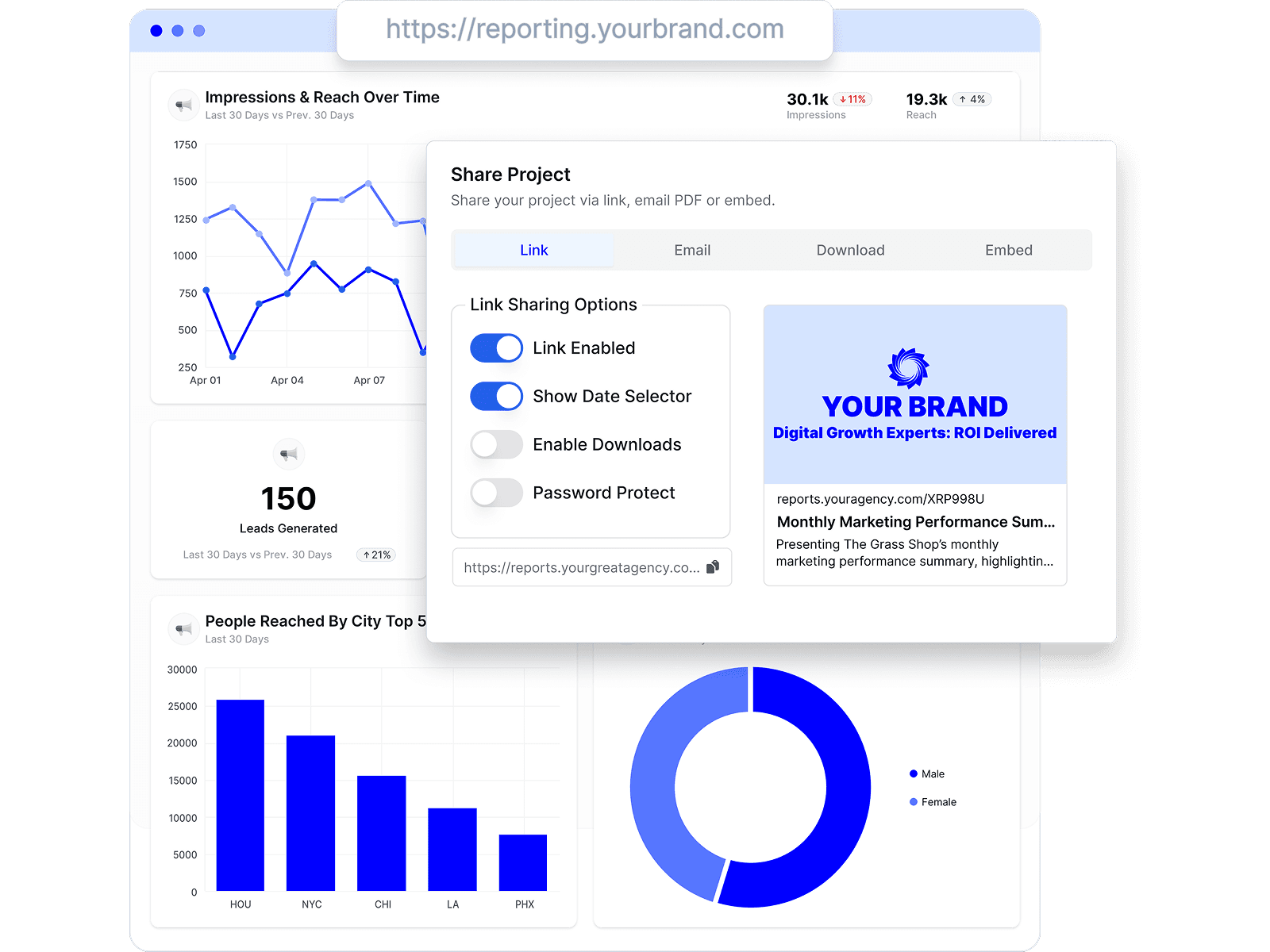
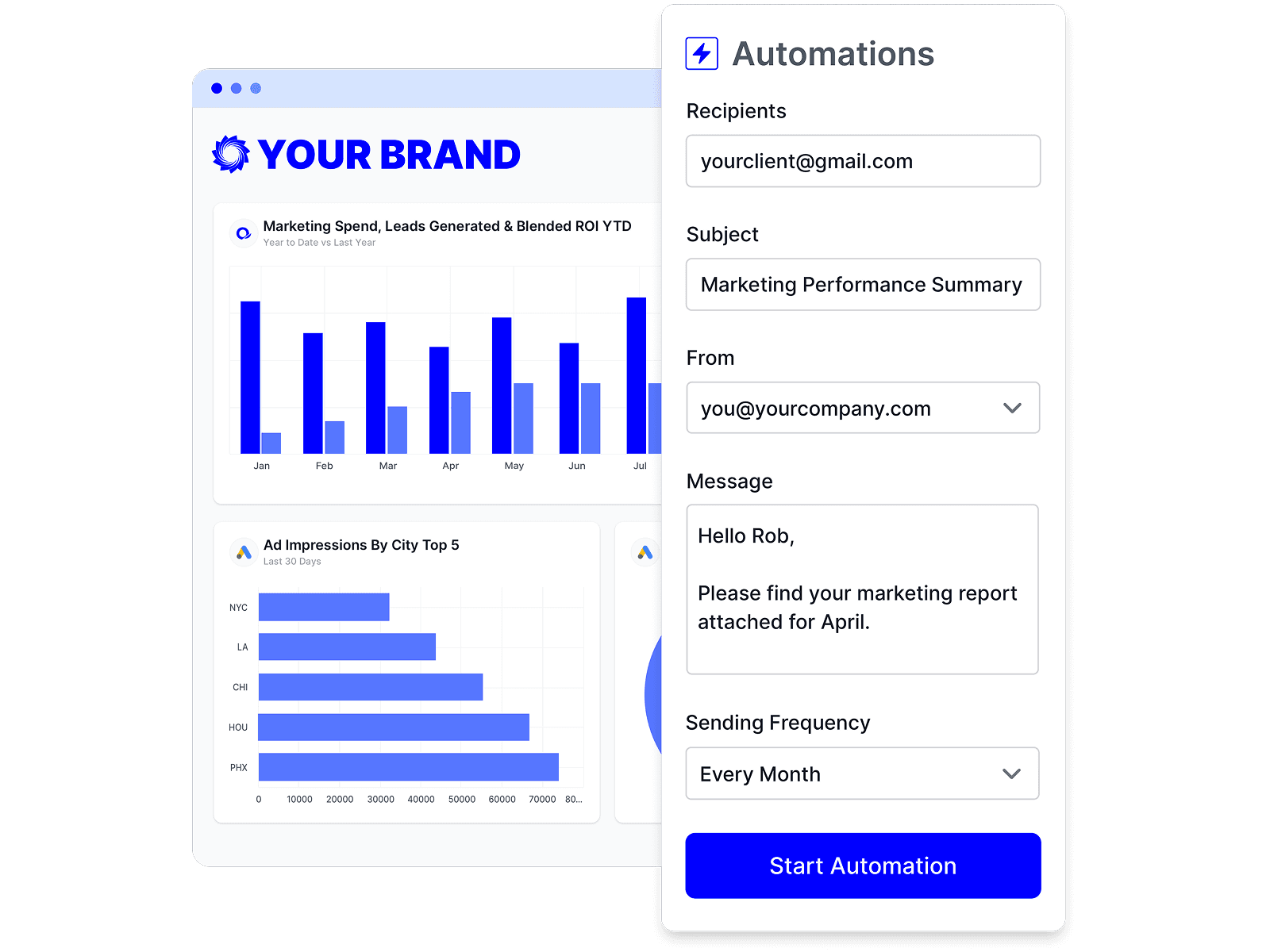
The advantage is how much of the agency workflow Oviond bundles into one plan. You get white-label delivery by default, custom domains, custom email senders, unlimited dashboards and reports, unlimited team users, full API access, and reusable assets that make it easier to standardize reporting across clients. That matters when your team is producing the same monthly report over and over, because the platform is built to reduce rebuild work instead of adding more of it.

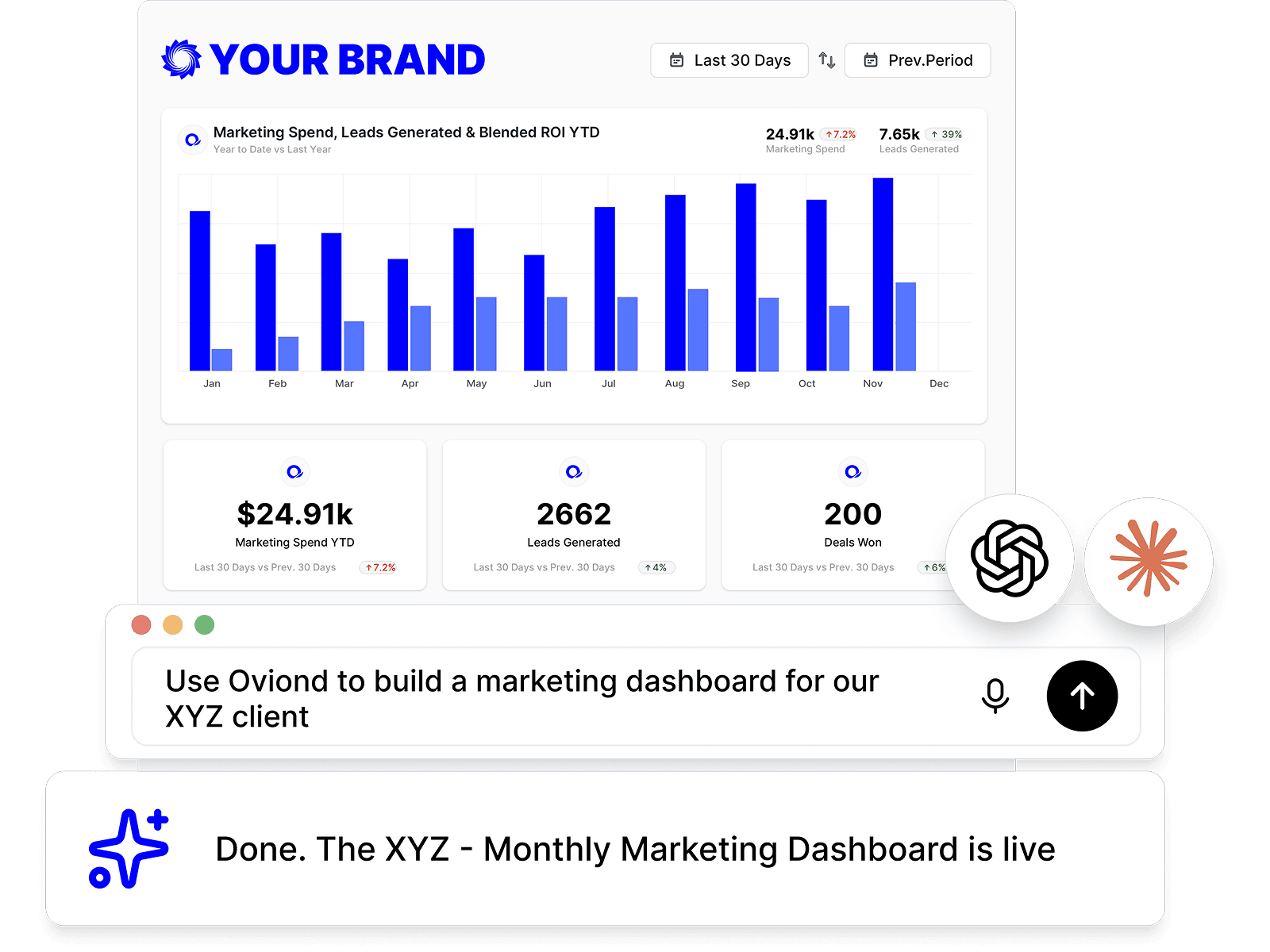
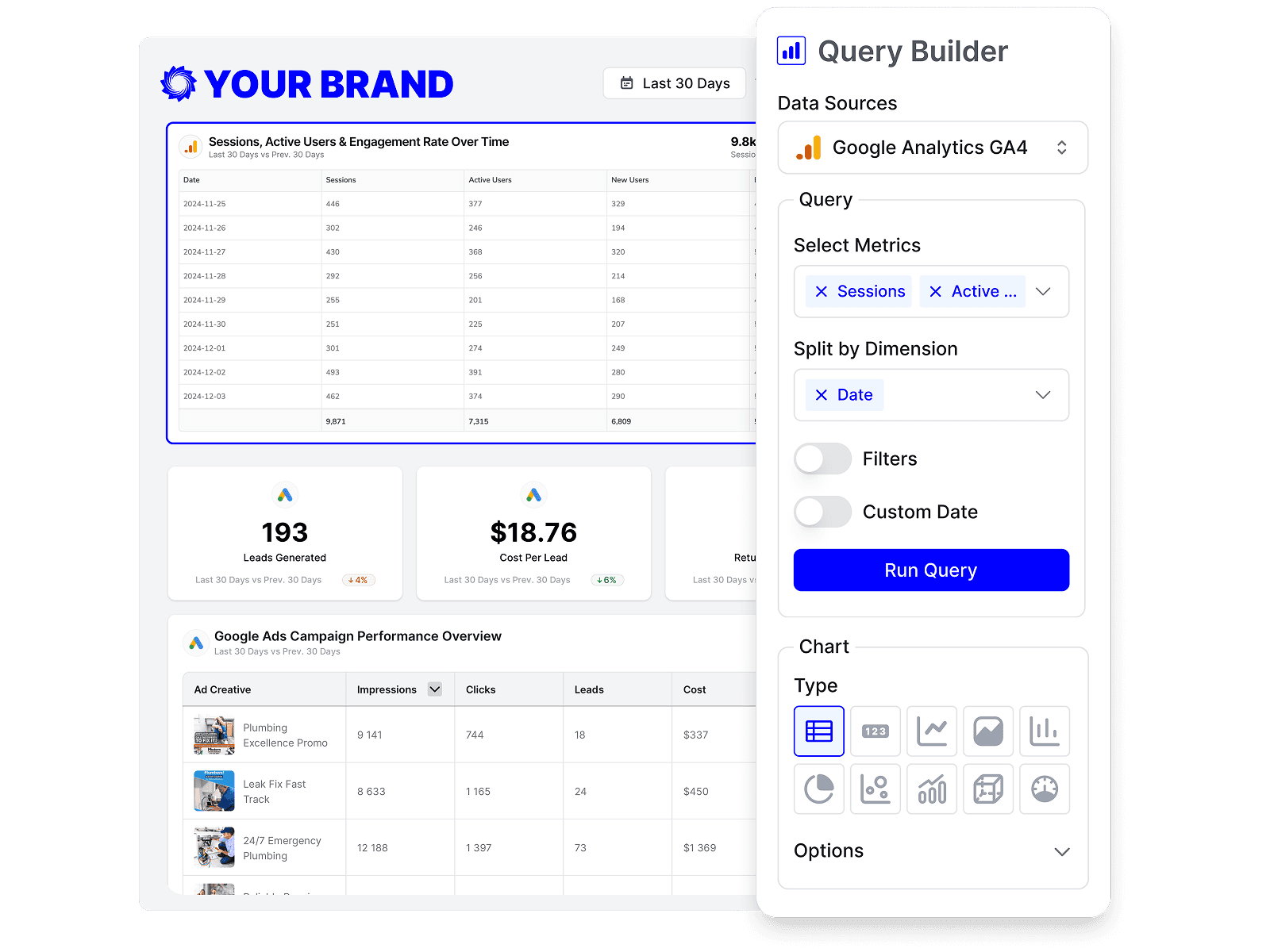
Oviond also handles the setup side well. You can use drag-and-drop building, templates for GA4, PPC, e-commerce, and social, plus custom queries, calculated and blended metrics, and goal tracking. If you want AI-assisted setup, Oviond includes MCP-based support for assistants like Claude and ChatGPT, which makes it easier to build reports without starting from scratch every time.

Practical rule: If your agency is still copying numbers into slide decks, you do not need a prettier spreadsheet. You need a reporting system that sends branded, current client views without manual cleanup.

Pricing is straightforward too. Oviond uses a single plan with every feature included, priced by client count, starting at $39 per month billed annually for up to five clients, or $49 month-to-month, with a free 15-day trial. It is also used by 3,000+ agencies, and reviewers consistently point to the clean dashboards, Google Sheets connectivity, and support quality. For agencies that want a simpler alternative to Looker Studio chaos, Oviond is the most direct answer, and you can compare it against the market mindset behind AgencyAnalytics alternatives.

Best for: Agencies that want white-label client reporting, predictable pricing, and one system for dashboards, delivery, and scale.
Website: Oviond

2. AgencyAnalytics

AgencyAnalytics is one of the most familiar names in agency reporting, and for good reason. It's designed around client work, with 85+ integrations, unlimited users, white-label client portals, automations, and built-in AI features for summaries, anomaly detection, and forecasting. If your team wants a platform that feels purpose-built for recurring client reporting, this one belongs near the top of the shortlist.

AgencyAnalytics

Strong agency workflows, with a pricing model to watch

The appeal here is obvious. AgencyAnalytics keeps the core pieces together on a transparent plan, so you're not chasing add-ons just to make reports usable. White-label branding, custom domain, sender controls, role-based access, goals, alerts, and client portals make it easy to hand off polished reporting without making every account manager rebuild the same assets.

It does have a tradeoff. Rank tracking and database connectors are paid add-ons, and pricing scales with client count. That's manageable for smaller rosters, but agencies with a long client list should run the math carefully. If your reporting stack is becoming more complicated than your delivery model, Oviond is the simpler alternative to compare against, especially if you want a clear AgencyAnalytics alternative that keeps pricing and setup more straightforward.

AgencyAnalytics works well when you want a mature agency product and can live with a pricing model that grows alongside your client base.

Best for: Agencies that want a polished, established reporting platform with strong branding controls and AI-assisted summaries.
Website: AgencyAnalytics

3. Whatagraph

Whatagraph is the pick for agencies that care about presentation as much as data consolidation. It focuses on cross-channel templates, source blending, custom metrics and dimensions, and full white-labeling. For teams juggling multiple brands or client verticals, that combination makes the reporting process feel more organized and less like a monthly rescue mission.

Whatagraph

Good for complex reporting, not casual use

Whatagraph's strength is that it doesn't treat automation as a side feature. It's built around recurring reporting, reusable templates, and broader source coverage that includes advanced and premium integrations such as Shopify, Semrush, Ahrefs, Klaviyo, DV360, and Adobe Analytics on higher tiers. Unlimited users also make it easier to involve account teams, operators, and leadership without worrying about seat costs.

The tradeoff is price. Its public pricing starts higher than some simpler tools, and the enterprise tier requires a custom quote. That's fine if your agency needs premium integrations and polished reporting at scale, but it can feel heavy for smaller teams that just want to stop rebuilding monthly reports. In that case, Oviond gives you a more agency-native path with white-label delivery and simpler pricing, which is why many teams start by comparing it with a Whatagraph alternative.

Best for: Agencies that need beautiful, blended reporting across multiple clients and want strong template-driven automation.
Website: Whatagraph

4. Swydo

Swydo is a practical reporting tool for agencies that care more about forecastable costs than flashy extras. It's priced by the number of connected data sources, while still offering unlimited users, clients, dashboards, and reports on one plan. That structure is useful when your agency has a lot of logins and a lot of recurring reports, because the spend is easier to understand.

Swydo

Straightforward automation with fewer surprises

Swydo gives you the basics agencies use, templates, custom metrics, goals, alerts, white-labeling, and Google Sheets integration for the connectors it doesn't cover natively. That makes it a sensible option for teams that want to automate reporting without building a heavier analytics stack.

Its downside is simple. The platform has fewer native integrations than larger suites, and its advanced modeling features are limited. If your client mix is growing and your stack keeps expanding, you'll likely feel those limits. For agencies that want more source flexibility, reusable client assets, and a more complete white-label system, Oviond is the cleaner alternative to evaluate through a Swydo alternative comparison.

If your team needs predictable reporting costs and doesn't want per-seat fees, Swydo makes sense. If you need broader agency scale, it starts to feel narrow.

Best for: Agencies that want simple automation, unlimited users, and a spend model tied to connected sources.
Website: Swydo

5. Looker Studio Google

Looker Studio is still the default free option for teams already living inside Google's ecosystem. It connects natively to GA4, Google Ads, Search Console, Sheets, and BigQuery, and it gives you deep flexibility if you're willing to assemble everything yourself. For agencies, that flexibility is exactly what causes the problem.

Looker Studio Google

Free is not the same as scalable

The tool is useful because it's free at the core and highly adaptable. You can build custom sources, use community connectors, and create whatever report structure you want. If your agency only needs lightweight internal reporting and the Google stack covers most of the client data, Looker Studio can do the job.

The problem is maintenance. Third-party connectors usually add cost and can be unreliable, and the platform lacks agency-specific features like white-labeling, automated client management, and dedicated support. That's why it so often turns into a patchwork of connectors, templates, and manual fixes. If you're trying to move away from that chaos, Oviond is the more agency-native option, especially if you're actively comparing it with a Looker Studio alternative.

Best for: Agencies that want a free, flexible starting point and don't mind the upkeep.
Website: Looker Studio

6. DashThis

DashThis is one of the easiest tools to understand if your agency needs simple, polished reporting fast. It focuses on automated dashboards, scheduled reports, white-label options, prebuilt templates, and clear sharing controls. For small to mid-sized portfolios, that keeps the setup light and the workflow manageable.

Fast setup, lighter analysis

DashThis is especially good when your team wants to spin up client-ready dashboards quickly. Prebuilt templates for PPC, social, and analytics make it easy to get moving, and the white-label options, custom domain, and custom email settings help keep the client experience clean. Unlimited users also make collaboration easier across account teams.

The tradeoff is depth. Source limits per plan can increase costs, and the advanced analysis features are lighter than BI-style platforms. AI Insights Pro is an add-on, not the main event. That's fine if your goal is simple recurring reporting, but it's not where you go if you need a broader agency reporting system with reusable assets, custom client structure, and fuller scale planning. Oviond sits closer to that need, with more of the workflow built into the platform from the start.

Best for: Agencies that want quick dashboards and don't need a heavy analytics layer.
Website: DashThis

7. Databox

Databox works well for agencies that want KPI tracking, forecasting, and a broad connector catalog in one place. It advertises 100+ integrations in its marketing dashboard materials and is positioned as a consolidation layer for teams dealing with fragmented marketing channels. That matters in an agency setting, because more channels usually means more report chasing.

Databox

Broad connections, but watch the plan structure

Databox includes unlimited dashboards and reports on paid plans, datasets for modeling and combining sources, API and database support, AI assistance, forecasting, anomaly detection, and sub-accounts for multi-brand use. Team plans also avoid per-seat fees, which is useful when you need broad access across account managers and operators.

The downside is that lower tiers can be restrictive on source counts, and some enterprise security or white-label options are add-ons. That can push the total price higher than it first looks. For agencies that want simpler ownership, predictable delivery, and all the features in one place, Oviond is the more direct option to compare.

Best for: Agencies that want strong KPI tracking, forecasting, and a wide source catalog without seat-based pricing.
Website: Databox

8. Klipfolio

Klipfolio is the platform for agencies that like control. It offers 130+ integrations, spreadsheet-style modeling, joins, API support, published links, PDF and scheduled reports, plus SSO on higher tiers. If your agency needs more control over how data is shaped before it gets shown to clients, Klipfolio gives you that flexibility.

Klipfolio

Flexible, but not the fastest route

Klipfolio's partner and agency plans include client slots, and there's a white-label bundle available if you want to strip platform branding out of the client experience. The reporting and modeling depth is solid, and the platform has enough maturity to support more complex agency use cases.

The catch is setup effort. It takes more work than template-first tools, and the full white-label bundle is an additional monthly cost rather than a default inclusion. If your team wants a simpler agency-native setup with white-label included and fewer moving parts, Oviond is easier to operate day to day.

Klipfolio is a strong fit when your team wants more modeling control. It is less useful when the real problem is reporting chaos, not dashboard flexibility.

Best for: Agencies that want modeling depth and can invest time in setup.
Website: Klipfolio

9. TapClicks

TapClicks is built for agencies and marketing teams that need a broader operations suite, not just a dashboard. It includes 250+ connectors, SmartReports, SmartAnalytics, SmartSlides, TapAI, goals, pacing, predictive analytics, attribution, leads management, and auto-generated slide decks. The platform is clearly designed for teams handling many channels and many stakeholders.

TapClicks

Powerful, but heavier than most agencies need

The connector count reflects the larger category shift toward centralized reporting environments. As noted earlier in the industry data, modern dashboard systems now connect across dozens or even hundreds of sources, because agency teams can't afford to manage reporting one channel at a time. TapClicks leans hard into that reality, then adds AI-driven analysis and slide generation on top.

That strength also creates complexity. Pricing is sales-assisted and not public, and the platform can be overkill for smaller teams that just want clean, branded reports without enterprise overhead. If your agency needs simplicity, predictable pricing, and less operational drag, Oviond is the more focused choice.

Best for: Larger agencies that need dashboards, slide decks, and AI analysis in one enterprise-style stack.
Website: TapClicks

10. NinjaCat

NinjaCat is a serious option for agencies that care about governance, taxonomy, and multi-account data handling. It combines a Marketing Data Cloud, native and smart connectors, reporting automation, AI-assisted transforms, and distribution to BI tools and portals. It's clearly aimed at teams that have outgrown lightweight dashboard tools.

NinjaCat

Better for control than for simplicity

NinjaCat's strengths show up when your agency has a lot of client structure to manage. Taxonomy handling, field-level references, and Snowflake support make it more comfortable for teams that need disciplined data flows. If you're working across multiple brands and want the reporting layer to behave like part of a larger data operation, it can fit well.

But it's more technical to implement than lightweight dashboard tools, and public pricing isn't listed. That makes it a harder choice for agencies that want to reduce reporting chaos quickly. If your priority is getting client reporting under control without adding complexity, Oviond is the simpler path.

Best for: Agencies that need scalable governance and data structure, not just client-facing dashboards.
Website: NinjaCat

Top 10 Marketing Dashboard Software Comparison

Platform Core features UX / Quality Price & Value 👥 Target audience ✨ Unique selling points
🏆 Oviond 60+ connectors, live dashboards, white‑label reports, templates, API, automation, AI ★★★★☆, intuitive drag‑&‑drop, unlimited dashboards/users 💰 From $39/mo (annually, 5 clients); single plan, scales per client 👥 Agencies (also in‑house & consultants) ✨ White‑label by default, no seat fees, MCP AI integrations, migration & human support
AgencyAnalytics 85+ integrations, white‑label client portals, AI summaries, alerts ★★★★, fast setup, agency workflows 💰 Per‑client pricing; single plan but scales with client count 👥 Multi‑client agencies ✨ Built‑in AI summaries, forecasting & anomaly detection
Whatagraph Cross‑channel templates, source blending, custom metrics, enterprise connectors ★★★★, rich templates; enterprise features on higher tiers 💰 Higher entry cost; Prime requires custom quote 👥 Agencies & multi‑brand teams ✨ Advanced blending + premium enterprise connectors (DV360, Adobe)
Swydo Unlimited users/clients/dashboards; pricing by data source; Google Sheets integration ★★★☆, practical automation, fewer native connectors 💰 Per‑data‑source pricing; cost‑efficient for many logins 👥 Small–mid agencies ✨ Data‑source pricing model; Google Sheets fallback
Looker Studio (Google) Free Google native connectors, community connectors, custom data sources ★★★, extremely flexible but DIY; high maintenance 💰 Free core; 3rd‑party connectors often paid 👥 Google‑stack users, analysts, DIY teams ✨ Free + deep BigQuery/GA integration and custom modeling
DashThis Prebuilt templates, data blending, white‑label, scheduled reports ★★★★, very quick to build client‑ready dashboards 💰 Competitive for small/mid portfolios; source limits per plan 👥 Small–mid agencies ✨ Rapid setup for client‑ready dashboards
Databox 130+ integrations, datasets/modeling, AI (Genie), sub‑accounts ★★★★, frequent syncs, forecasting & AI; some source limits 💰 Paid plans; source limits add cost; team plans remove seat fees 👥 Agencies & teams needing forecasting ✨ AI analyst (Genie), datasets for modeling and sub‑accounts
Klipfolio 130+ integrations, spreadsheet‑style modeling, published links, SSO ★★★☆, powerful customization, more setup effort 💰 Moderate; white‑label bundle is extra 👥 Agencies needing deep customization ✨ Strong data modeling + partner/agency pricing and services
TapClicks 250+ connectors, SmartReports/Analytics/Slides, TapAI, predictive analytics ★★★★, enterprise‑grade, feature‑rich but complex 💰 Sales‑assisted enterprise pricing 👥 Large agencies & brands with complex ops ✨ End‑to‑end ops: warehousing, auto slide decks, persona AI agents
NinjaCat Marketing Data Cloud, native connectors, no‑code/AI transforms, reporting automation ★★★★, scalable governance, more technical to implement 💰 Quote/demo required; enterprise focus 👥 Multi‑brand advertisers & enterprise agencies ✨ Enterprise data governance, Snowflake connect, taxonomy management

From Reporting Chaos to Client Clarity

Choosing the right marketing dashboard software is about more than charts. It's about reclaiming your team's time, keeping client reporting consistent, and stopping the monthly scramble before it burns out your account managers. Agencies don't need more tabs, more exports, or another tool that looks good in a demo and becomes a headache in week two.

The right platform makes reporting the simplest part of your workflow. That means white-label delivery, automated reports, live dashboards, scalable pricing, and enough integrations to cover the channels your clients use. It also means picking a tool that fits agency life, not a generic analytics stack built for someone else's problems. If you want a deeper take on why teams get stuck in reporting churn, this guide on dashboard fatigue is worth reading.

Oviond stands out because it keeps the agency workflow simple without cutting out the parts that matter. You get white-label client reporting, branded dashboards, automation, AI-assisted setup, and pricing that scales with your client count instead of punishing you for growing. If you're ready to replace spreadsheet chaos with a cleaner system, start with Oviond and see how agency reporting that finally feels simple can fit your team.

Related articles

Simplify marketing reporting today

Stop juggling multiple tools. Start presenting clear, automated reports your clients will love